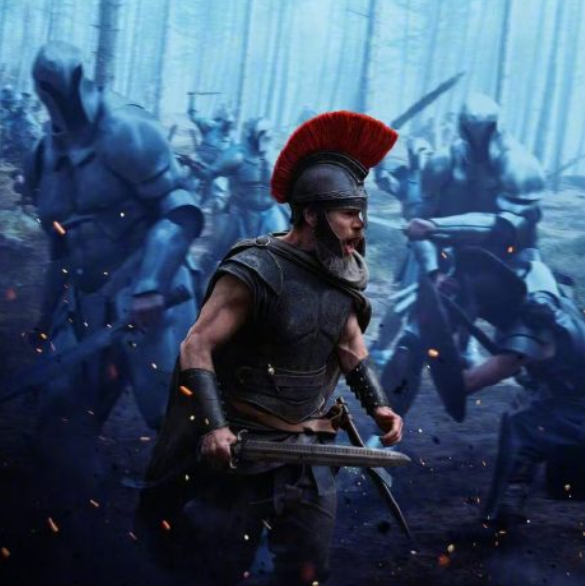
Some films end when the audience leaves the theatre.
Others continue long after the screen has gone dark.
Christopher Nolan’s The Odyssey, the recently released epic inspired by Homer, is one of them.
When the screen faded to black, I did not rise from my seat.
Before my eyes, the sea was still there—that sea, black as though heaven and earth had not yet been created. In my ears, the wind was still howling, the waves still roaring, and from the farthest edge of the world came the cries of thousands upon thousands of restless souls.
At that moment, I suddenly understood:
What truly overwhelms us is not how a hero conquers the sea.
It is how many people the sea swallowed who never made it home.
Odysseus endured unimaginable suffering and, at last, returned to his homeland.
But what of those behind him?
What of the men who had left home beside him?
Those who had fought shoulder to shoulder with him, who had raised their spears amid fire, who had defended themselves against blades among the ruins, who had once stood at the bows of ships gazing toward the distant direction of home?
Where did they go?
Midnight descended.
The heavens hung low.
The sea lay like an endless sheet of black iron, pressing heavily against the edge of the earth.
There were no stars.
No moon.
Only the waves, surging again and again through the darkness toward the shore, like some ancient beast breathing between heaven and earth.
Following the goddess’s guidance, Odysseus came to that beach with several of his warriors.
They knelt before vessels filled with blood—a handful of living men kneeling at the boundary of the world of the dead, before the very gates of Hades.
Then the darkness began to awaken.
At first, there was only the faintest sigh.
As though somewhere far away, someone had called out in a dream.
Then came another voice.
A third.
A tenth.
A hundredth.
Until the entire night began to tremble.
The dead were coming.
They emerged from the blackness in the distance.
They came from battlefields.
They crawled from beneath charred city walls.
They rose beside bones left unburied in forgotten wildernesses.
They came from graves thousands of miles away, graves whose names no living person remembered.
They were without number.
Rank upon rank.
Wave upon wave.
They covered the shore in darkness.
It seemed as though the whole earth were standing there, filled with the dead.
There was no end to them.
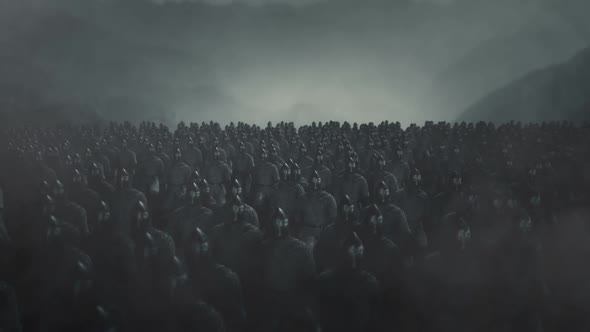
No boundary.
They came like the tide—and yet more violently than any tide.
They had not come for revenge.
They raised no swords.
They only wept.
At first, one man was crying.
Then an army was crying.
And finally, it seemed as though the entire kingdom of the dead had begun to weep.
Their cries swept across the sea, struck the rocks, pierced the darkness, and rose with the force of mountains collapsing into oceans.
It was as though the grief of countless mothers who had lost their sons, countless wives whose husbands never returned, countless children who would never see their fathers again—all of it had gathered into a single night.
Someone cried:
“My mother is still waiting for me!”
Another:
“My child does not even know that I am dead!”
Someone asked:
“Why did the victors go home, while we were left here?”
Another asked:
“Where are my bones?”
And another:
“Does anyone still remember my name?”
Many had no strength left even to speak.
They simply stood there.
Between the black sea and the black sky.
Watching the few who were still alive.
Their gaze was heavier than any accusation.
They, too, had once been young.
They had once run through spring fields.
They had once loved a girl.
They had once sat beside their mothers and eaten the simplest evening meal.
And on the day they left for war, they too had turned back, waved, and said:
“Wait for me. I will come home.”
But they never did.
War erased their names from the world of the living.
Heroes returned to palaces.
Poets sang of victory.
Cities raised their banners.
But they remained forever in the darkness.
In a night known to no one.
The sight leaves us unable to breathe.
Because suddenly we understand:
History often remembers who won a war.
It seldom asks where those who never returned finally went.
Odysseus heard them.
He was a man who had truly heard the dead weep.
A man who had seen with his own eyes countless homeless warriors emerging from the darkness.
Following the goddess’s guidance, he swore:
If fate allowed him once more to set foot upon his homeland, if the gods permitted him once again to see his home, he would still leave again.
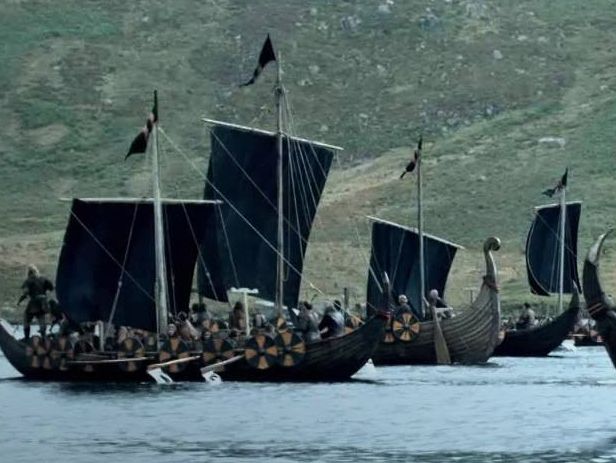
He would launch a swift ship.
He would sail toward the place where the sun descends.
He would chase the setting sun.
He would travel to that farthest edge of the world, illuminated by sunset and then swallowed by darkness.
And there he would seek a resting place for those who had died far from home—the unburied, the unmourned, the forgotten, those whose names no one remained to call.
At last, he returned to his homeland.
The throne stood before him.
His native soil lay beneath his feet.
The palace gates opened once again.
His beloved and his family were beside him.
Everything he had endured unimaginable suffering to regain was finally his once more.
But he did not stay.
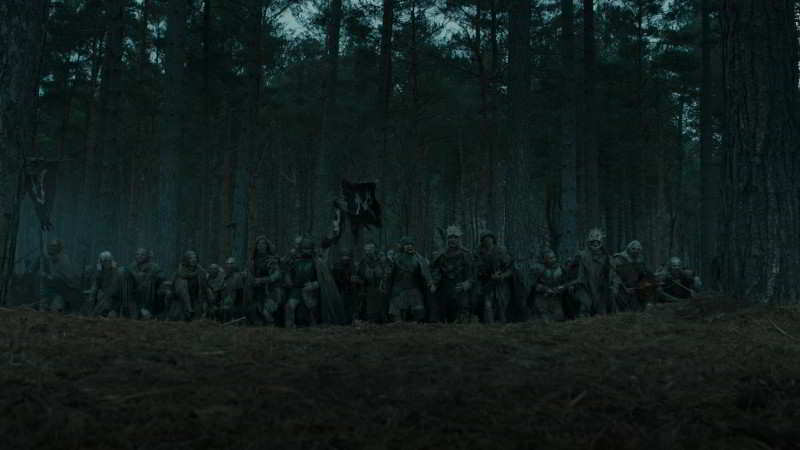
Because that midnight had become part of his soul forever.
He could not forget that shore black with the dead.
He could not forget the countless hands of fallen warriors reaching toward him.
He could not forget the cry that struck his heart again and again like the waves:
“We want to go home.”
And so he took his beloved with him and boarded a ship once more.
The sails rose.
The wind filled the canvas.
The bow turned toward the setting sun.
He did not look back.
For he had learned that there are responsibilities in this world heavier than a crown:
to give peace to the comrades who died beside you.
Singapore.
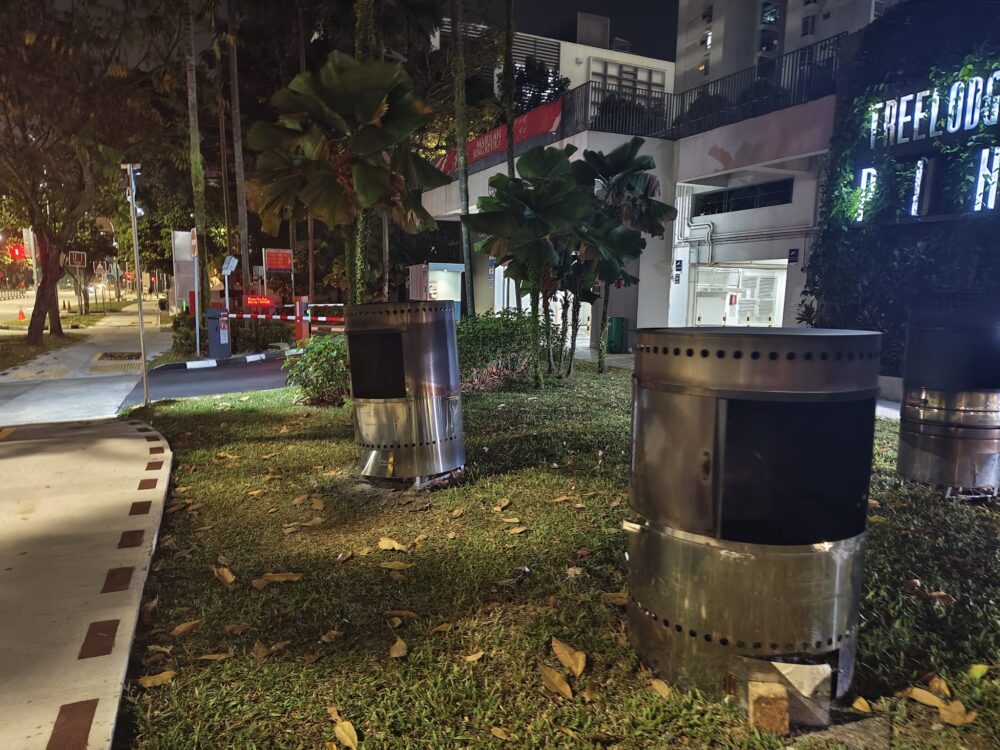
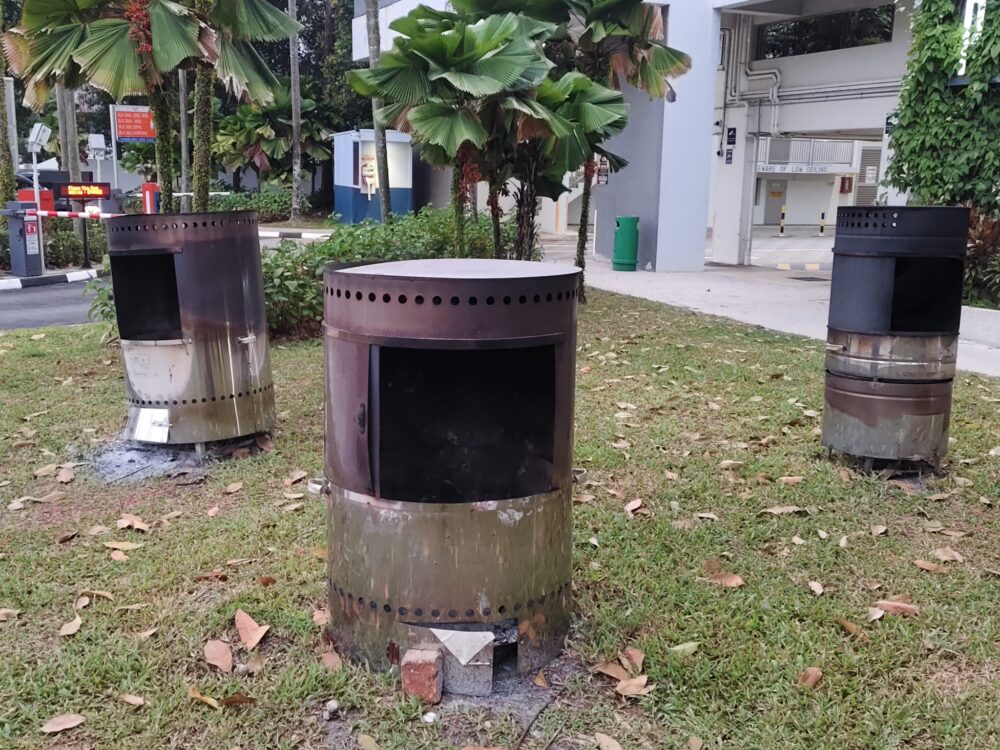
Every year, during the seventh lunar month, as evening falls, small flames and sticks of incense begin to glow along the streets.
Beneath HDB blocks.
Beside roads.
Outside coffee shops.
At the corners of old streets.
A government-provided burning bin.
A large steamed bun.
A few simple dishes.
A cup of water.
A cup of wine.
Several sticks of incense.
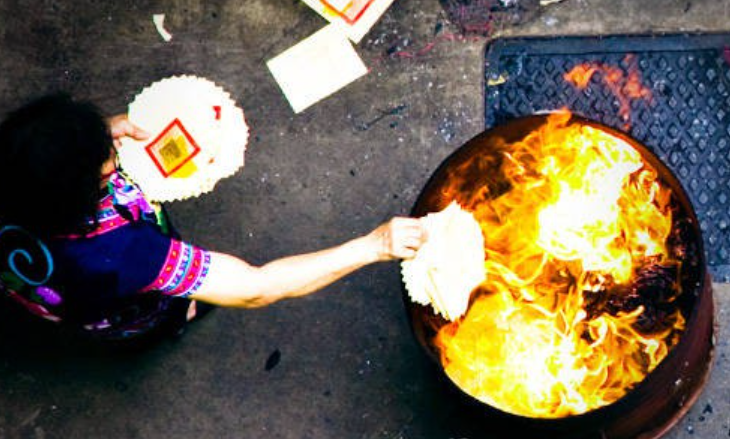
Bundles of joss paper.
The paper burns slowly inside the metal burner.
Sparks rise.
Smoke drifts into the night.
And those making offerings murmur:
“Good brothers, come and take this money. Take some food with you.”
In the past, I always thought this was simply an ancient folk custom of Nanyang—the South Seas.
But after watching The Odyssey, for the first time I seriously asked myself:
Who, exactly, are these “good brothers” to whom people speak?
Perhaps they once all had names.
Only the names disappeared with time.
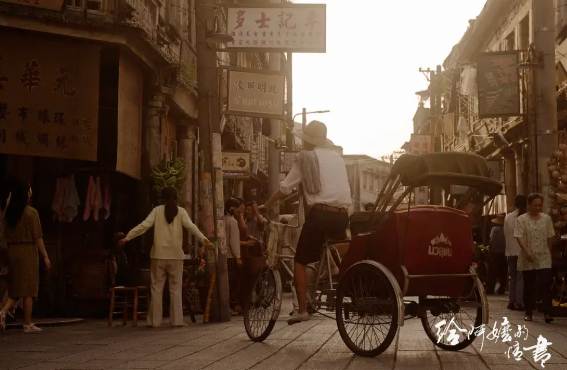
More than a century ago, wooden ships left the ports of southern China one after another.
Inside their crowded holds were young people from Fujian, Teochew communities, Putian and Hainan.
Men.
Women.
Others came across the Indian Ocean, from the Malay Archipelago, and from lands even farther away.
When they departed, they were living, breathing human beings.
They had mothers.
They had hometowns.
They had somewhere they ultimately hoped to return to.
They crossed the sea and came to Nanyang.
Some descended into mines.
Some entered rubber plantations.
Some built railways.
Some built ports.
Some carried cargo beneath the burning sun.
Some disappeared into the jungle.
Some endured night after night inside hot, damp workers’ quarters.
Perhaps they often calculated quietly in their hearts:
Save a little more this year.
Next year, I will go home.
One more year.
Just one more.
When I have enough,
I will go home.
But some never lived to see that day.
They died of epidemics.
Of accidents.
Of poverty.
Of shipwrecks.
Of war.
They died in places where they had originally intended to stay only temporarily.
Some may even have died clutching a few hard-earned coins in their hands, because that money had been meant to go home with them.
But the money never went home.
Neither did they.
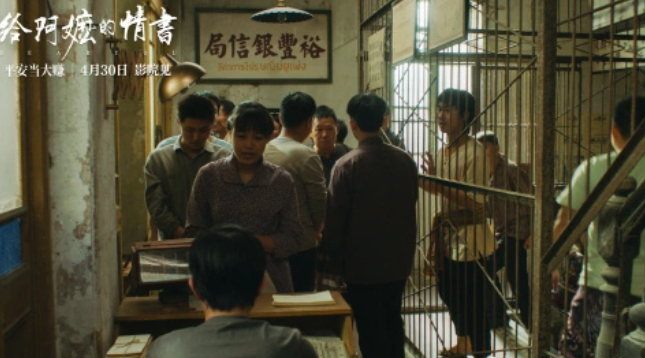
Like Zheng Musheng in the film Ah Ma’s Love Letter.
Lost forever to the sea.
Then came war.
Artillery fire crossed the straits.
Armies crossed borders.
Villages were destroyed.
Cities burned.
Countless soldiers and civilians died on the soil of Singapore and Malaya.
Some knew where they died.
Many more did not.
Some bodies were never found.
They came from different countries.
They spoke different languages.
They wore different uniforms.
But when death arrived, perhaps they all thought of the same things.
Mother.
Wife.
Children.
Home.
At the final moment of life, a person is no longer a soldier, no longer a labourer, no longer a stranger in a foreign land.
He is simply someone who wants to go home.
In Ah Ma’s Love Letter, those “good brothers” who died far from home in Nanyang stayed with me for a very long time.
“To die far from home in Nanyang.”
Only a few words.
Yet each feels as heavy as stone.
“To be a guest” means this place was never meant to be home.
“To die” means there can be no departure.
“Nanyang” means that the final sea, trees, monsoon rain and sky a person ever saw were all impossibly far from the place he called home.
Perhaps, on his final night, he dreamed of the little road outside his family house.
He dreamed of his mother calling his childhood name.
He dreamed that rain was falling in his hometown.
Then morning came.
But he did not wake.
And so I began to understand differently that bowl of food left beside the road during the seventh lunar month.
Those sticks of incense.
That cup of wine.
That small flame trembling in the night wind.
Perhaps they are not merely expressions of reverence toward spirits.
Perhaps they are also one of the simplest forms of compassion with which an ancient culture has learned to face death.
I do not know your name.
I do not know where you came from.
I do not know where your bones lie.
I do not know whether anyone in this world still remembers you.
But if no one has invited you to eat tonight,
there is a bowl for you here.
If no one has lit a lamp for you,
there is one here.
If no one has spoken your name for hundreds of years,
then tonight, we will not ask your name.
We will simply call you:
Good brother.
Those two words suddenly make one want to weep.
Because they are not driving the dead away.
They are saying:
If you have nowhere to go,
sit here for a while.
If you have wandered for too long,
then tonight,
you need not wander anymore.
Why does humanity build memorials?
Why, decades or even centuries after a war has ended, do we still raise monuments upon old battlefields?
Why do we build Tombs of the Unknown Soldier?
Why do we keep an eternal flame burning?
Perhaps because humanity understood long ago:
The living need memory. The dead need a resting place.
A war does not truly end with the final gunshot.
Nor with the signing of the final agreement.
Only when the dead have somewhere to rest, and the living are willing to remember them, can a war truly be said to have ended.
Singapore and Malaysia already have many important war memorials, cemeteries and historic sites.
And yet we still hope that one day, somewhere on this land, there might be a broader place of remembrance.
A place belonging to no single army.
No single ethnicity.
No single nation.
Not even to a single religion.
It would commemorate only one kind of person:
those who came to Nanyang, but never returned home.
The nameless labourers who died in mines.
The migrants who died on rubber plantations.
Those lost at sea.
Soldiers and civilians who fell in war.
Those who died in epidemics.
Those who died in the streets and were never claimed.
Those who left no descendants.
Those who have no gravestones.
Those who have no names.
Those whom no one comes to mourn.
We might give them one shared name:
The Nameless Departed of Nanyang.
We imagine a memorial garden facing the setting sun.
It need not be magnificent.
It need not even have a towering statue.
There would be trees.
Water.
Wind.
And a quiet path stretching toward the place where the sun goes down.
Each evening, as the sun sets, light would pass between the leaves and fall upon a stone monument.
Upon it would be written only these words:
Dedicated to all those who crossed the seas to Nanyang and never returned to their homeland.
Whatever your name, whatever your race, whatever your country, whatever your faith—
your crossing of the sea is over.
Your long road has come to an end.
Your wandering is finished.
Rest here in peace.
During the seventh lunar month, people could come.
Some would bring flowers.
Some would light lamps.
Some would bow.
Some would pray according to their own faith.
Others would do nothing at all.
They would simply stand quietly for a moment.
Perhaps schools could bring children there.
So that they might understand:
The Singapore and Malaysia we see today were not built only by the names recorded in history books.
Beneath these ports, streets, railways, plantations and the foundations of our cities lie the stories of countless people whose names have disappeared.
They were here.
They worked here.
They loved here.
They died here.
They deserve to be remembered.
We would like to offer a suggestion—perhaps one worthy of serious consideration—to governments, cultural institutions, religious organisations, charities and civil society:
Let us build a monument, or perhaps a memorial garden, for the nameless departed of Nanyang.
Let us complete an act of remembrance worthy of a civilisation.
Those who believe in spirits may regard it as a resting place for the “good brothers.”
Those who do not may simply see it as a historical park commemorating the nameless people who came before us.
Because whatever one believes, there is surely one thing on which we can agree:
Those without names should not be forgotten.
The Odyssey tells the story of a hero returning home.
Yet thousands of years later, what moves us to tears is not merely that Odysseus finally reached his homeland.
It is that midnight shore—and the countless souls upon it who could never go home.
Perhaps the greatest epics were never meant merely to glorify heroes.
In the end, they must also give a voice to those who can no longer speak.
From the Aegean Sea to the South China Sea.
From the Atlantic to the Pacific.
From the battlefields of Troy to the docks of Nanyang.
From ancient warriors to Chinese labourers who died far from home.
Across thousands of years, who knows how many people the oceans have carried away?
Some returned.
Some did not.
The sea gives no answer.
The next time the seventh lunar month comes, and we walk through the streets of Singapore and see someone lighting incense beside the road, perhaps we will stop.
And perhaps, in that moment, we will once again see the sea from the film.
Odysseus standing in the darkness.
Endless ranks of the dead emerging from the tide.
Their cries shaking heaven and earth.
Their hands reaching toward the world of the living.
Still searching for a road home that no longer exists.
And far away in Nanyang, perhaps there was once another man who died in a foreign land, who looked toward the sky in his final moment and softly called:
“Mother.”
Hundreds of years have passed.
No one knows his name.
Yet during the seventh lunar month, a stick of incense still burns for him.
And if one day we truly set aside a piece of land for them—raise a monument, plant a grove of trees, and let the setting sun descend slowly behind the stone each evening—then perhaps, at last, we may speak on behalf of this world to those souls who have wandered for far too long:
We have heard your cries.
We remember the roads you travelled.
We cannot return to you the homeland you lost.
But we can give you a place.
A piece of earth where you need wander no more.
A lamp that will not go out simply because no one remains to make an offering.
From this day forward,
you need not follow the tides anymore.
You need not wander through the nights of the seventh lunar month searching for a bowl of food.
You need not ask whether anyone remembers you.
Because here,
someone remembers.
Here,
someone is waiting for you.
Here,
at last,
there is a place for you.
The sea has been crossed.
The sun has set.
The war is over.
The suffering is gone.
The wandering, too, has come to an end.
Come home.
Here, at last, is your final homeland.
Author: River (September 11, 2026)