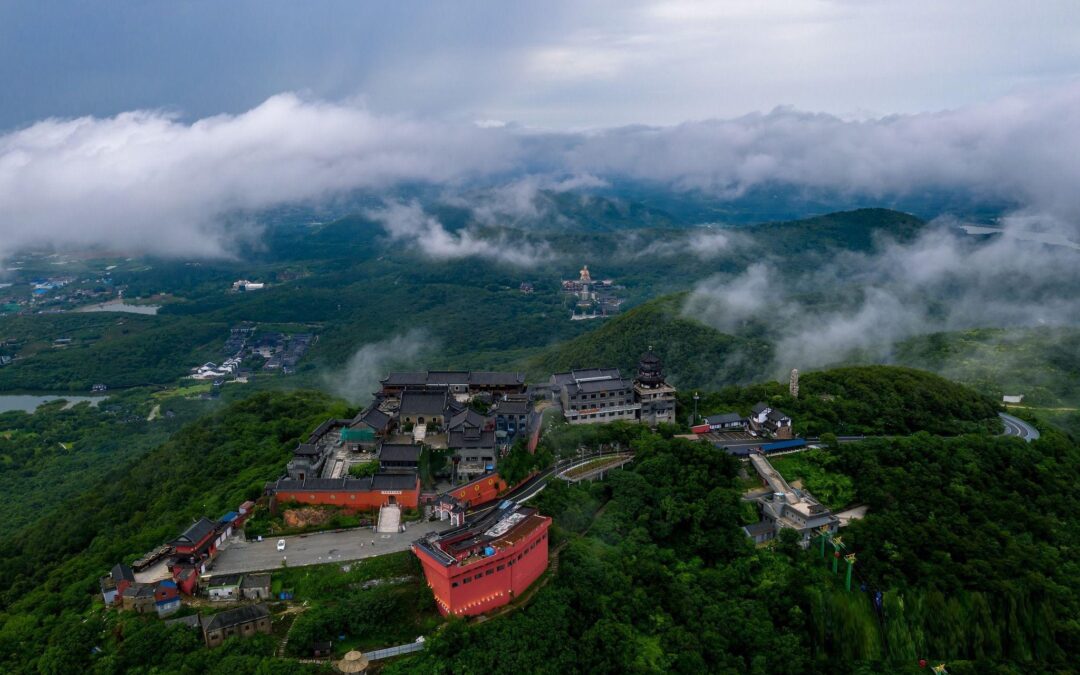
Mao Mountain (Mao shan)
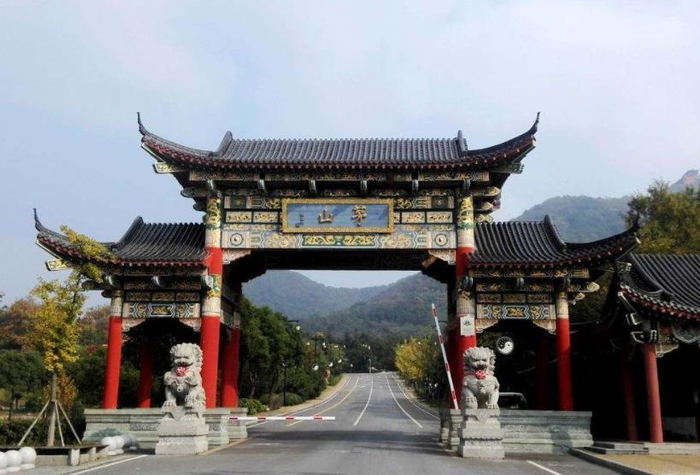
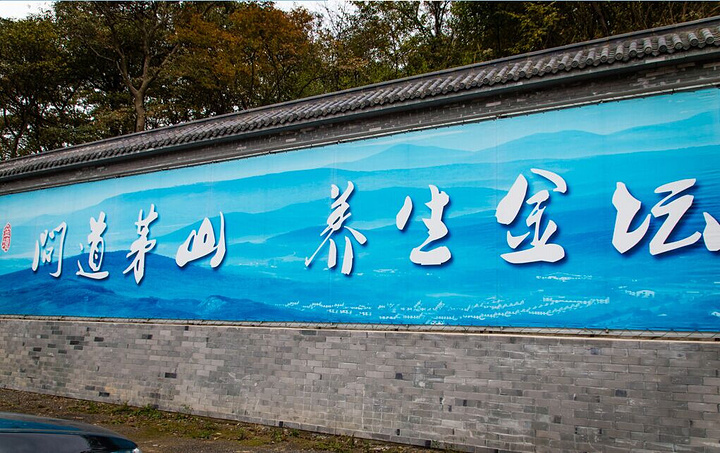
Maoshan is located in Jurong, Jiangsu Province, China. Formerly known as Juqu Mountain, it enjoys the reputation of “the First Blessed Land and the Eighth Grotto-Heaven”. It is a famous fairy mountain south of the Yangtze River as well as the ancestral shrine of the Shangqing School of Taoism, where exquisite mountain scenery and profound Taoist culture blend in perfect harmony.
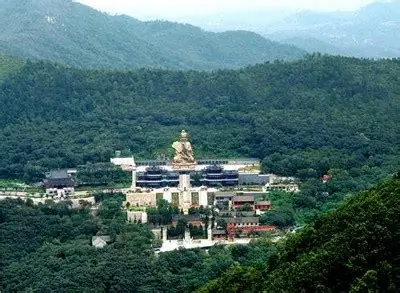
Stretching like a green dragon resting on the land of southern Jiangsu, Maoshan has its main peak, Big Mao Peak, standing at 372 meters above sea level with gentle and layered slopes. The mountain is densely wooded with evergreen pines and cypresses and swaying bamboo groves. Clear springs gurgle through valleys; the Xike Spring and Huayang Cave lie hidden in quiet ravines. At dawn and dusk, mist drifts over the mountainsides and sea of clouds surges, with the upturned eaves of Taoist temples faintly emerging amid rosy haze. In spring, wildflowers carpet the slopes; in autumn, red maples set off green woods. Every step reveals a new view in serene elegance. Walking slowly along bluestone paths, visitors breathe in fresh mountain air and leave mortal worries behind, immersed in peaceful tranquility.
Taoist heritage on this sacred mountain stretches back more than two thousand years. In the Western Han Dynasty, three brothers — Mao Ying, Mao Gu and Mao Zhong — resigned from official posts and settled here. They gathered herbs, refined elixirs and relieved local people’s ailments. Grateful locals renamed Juqu Mountain Maoshan and honored the three brothers as the Three Mao True Lords, marking the origin of Maoshan’s Taoist tradition. During the Eastern Jin Dynasty, scriptures and doctrines of the Shangqing School spread widely here.
Tao Hongjing, a revered scholar of the Qi and Liang dynasties, lived in seclusion on Maoshan for over forty years. He wrote books and established the school’s teachings, earning the title “Prime Minister of the Mountains” and laying the foundation for the Maoshan Sect. Flourishing in the Tang and Song dynasties, Maoshan grew into a major Taoist center south of the Yangtze River, nurturing many accomplished masters and abundant Taoist scriptures. As one of the Three Mountains of Talismanic Tradition, its influence has endured for millennia.
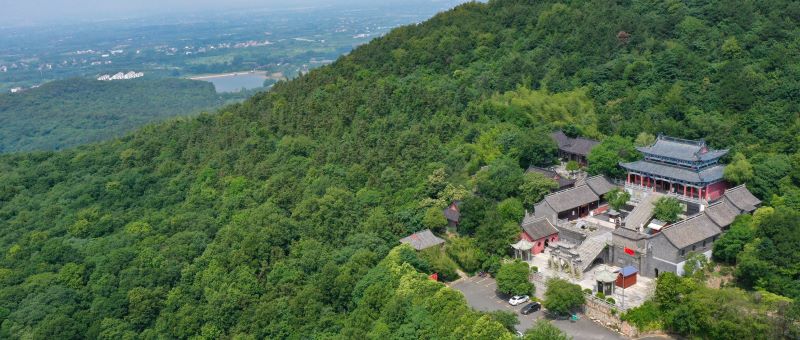
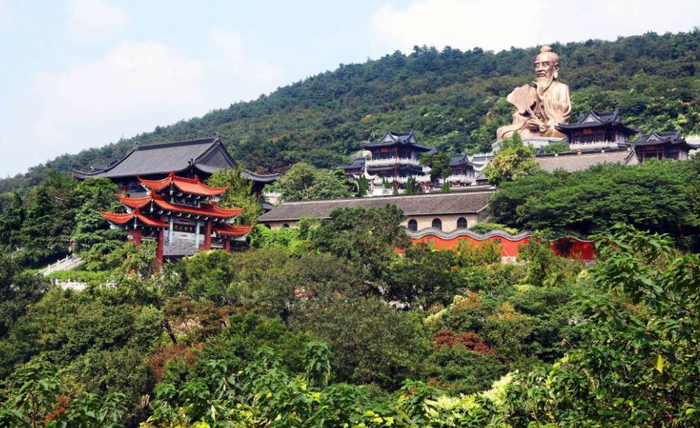
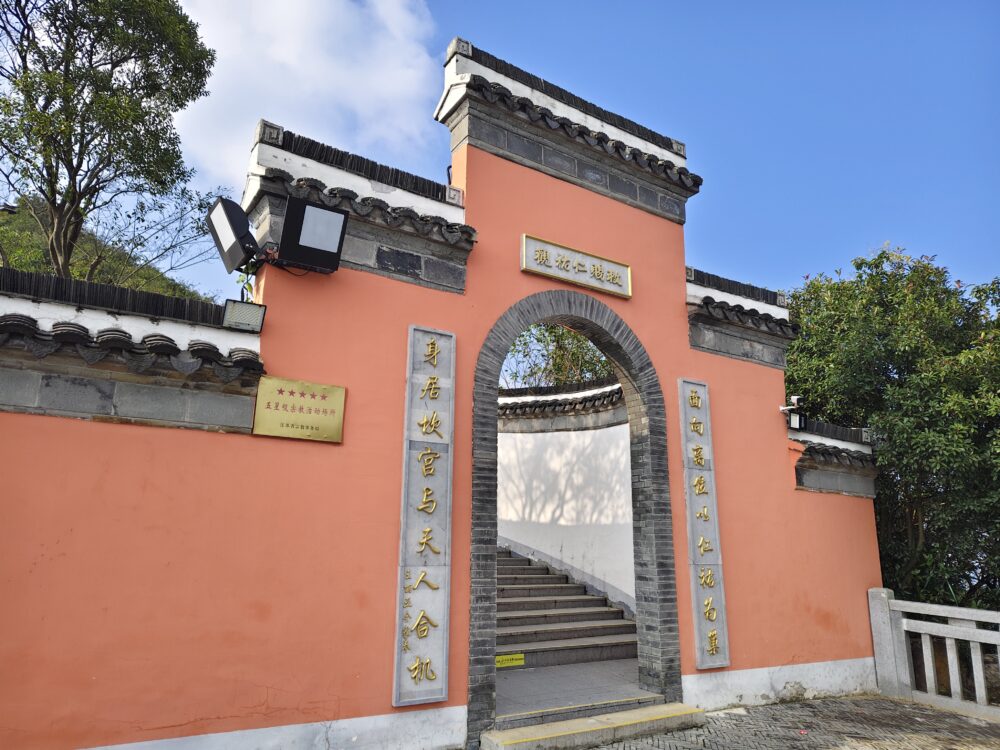
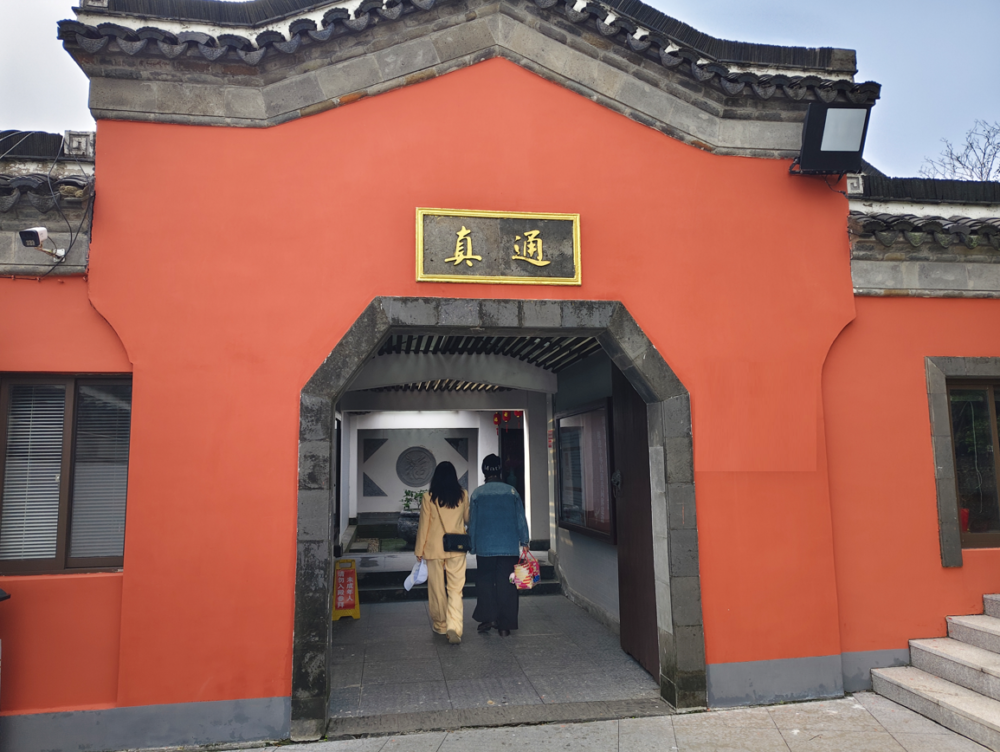
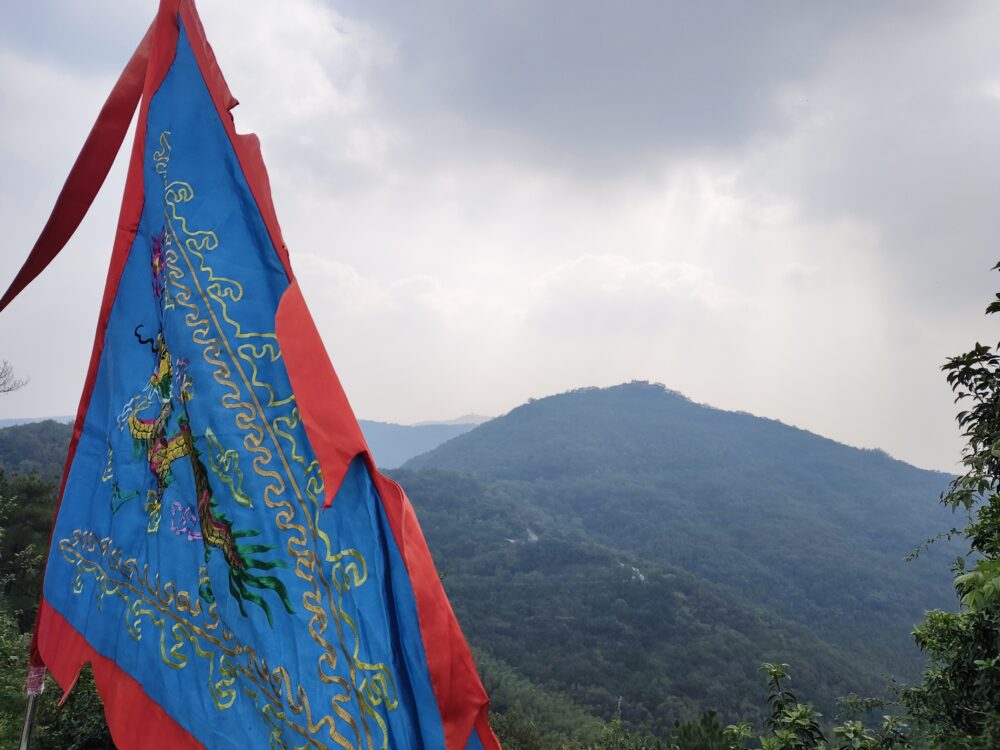
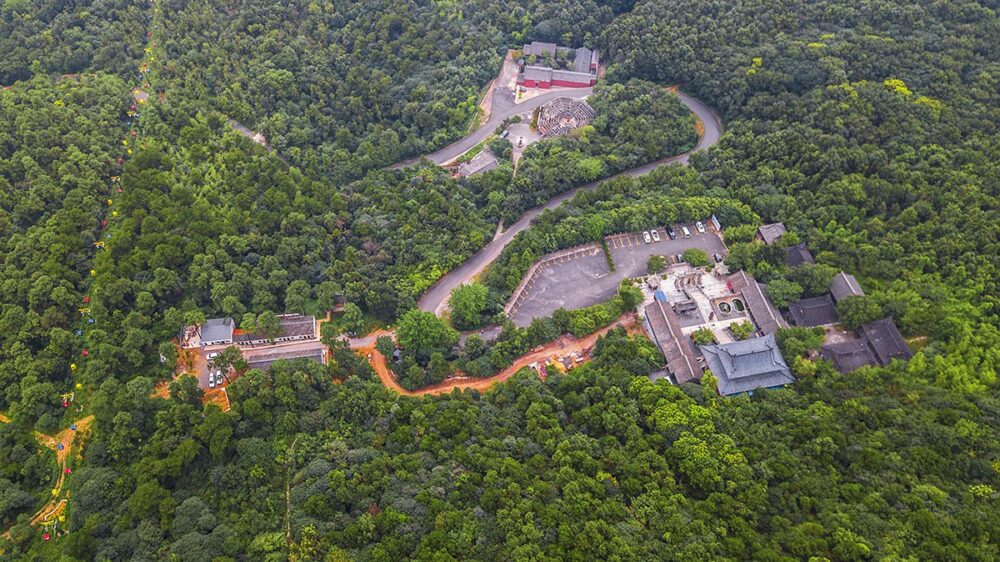
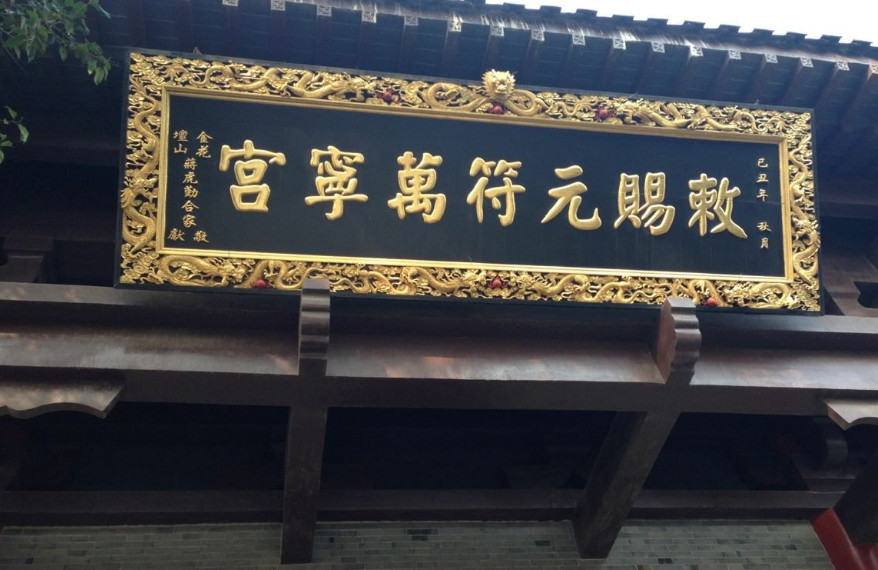
Ancient temples scatter along the mountain slopes, known as the Three Palaces and Five Shrines. At the summit of Big Mao Peak stands the Wanfu Palace at Ninefold Heaven, commonly called the Summit Palace. With red walls, dark tiles and soaring eaves rising above the sea of clouds, it serves as the primary shrine for worshipping the Three Mao True Lords. Halfway up the mountain is the Wanning Palace of Original Bliss, also known as the Seal Palace. Grand and solemn, it features a giant statue of Lord Laozi seated among the trees, radiating deep Taoist calm. The Chongxi Wanshou Palace rests at the mountain foot with magnificent halls steeped in antiquity. Temple bells echo on mountain breezes and incense curls upward. Inscriptions and couplets embody Taoist wisdom; every brick and tile bears witness to the long history of the Shangqing School.
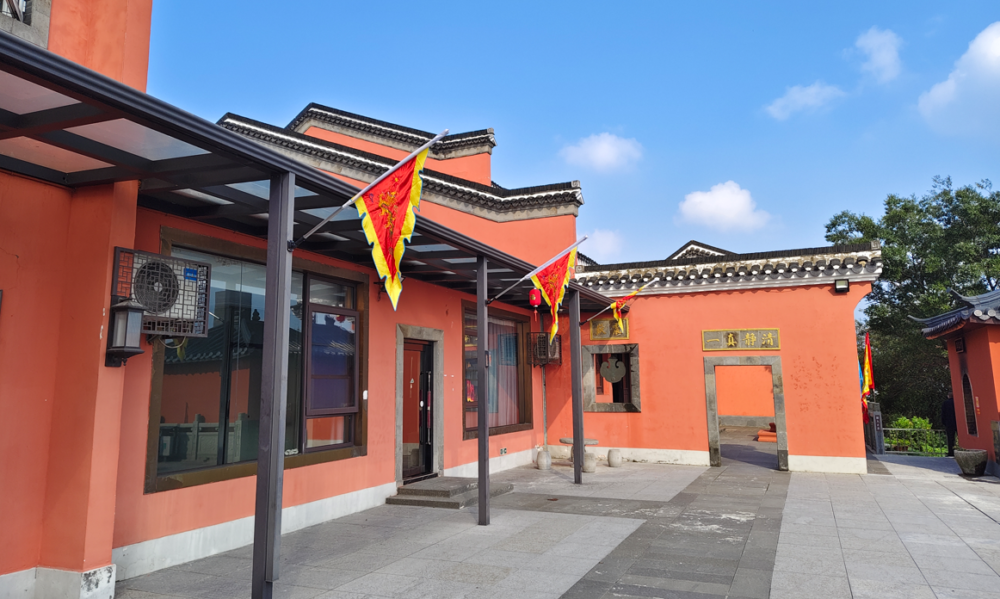
A visit to Maoshan offers not only stunning green mountains and shifting cloud vistas, but also a pilgrimage to an age-old Taoist source, where one may contemplate the Taoist wisdom of quietude and non-action. Nourished by mountains and rivers, enriched by cultural heritage, this blessed fairy mountain welcomes travelers from all corners of the world seeking serenity and Taoist enlightenment.
Taoism
In the 5th year of the First Yuan reign of Emperor Yuandi of the Western Han Dynasty (44 BC), the three Mao brothers — Mao Ying, Mao Gu and Mao Zhong from Xianyang, Shaanxi — gathered herbs, refined elixirs and saved people from illnesses on Maoshan. They are revered as the founding patriarchs of Maoshan Taoism. Later, Tao Hongjing established the Maoshan School of Taoism. The Yellow Court Classic is a key scripture of the Maoshan School and remains a daily text for practitioners of the Quanzhen School. Tao Hongjing and his disciples devoted decades to developing Maoshan, turning it into the heartland of the Shangqing School, which is therefore also known as the Maoshan Sect in later ages.
Rooted in ancient Chinese nature worship, ancestor veneration and the theories of Yin-Yang and the Five Elements, Taoism builds upon the Huang-Lao philosophical thought of the pre-Qin era. It honors Laozi as the Ancestor of Tao, regards Tao Te Ching as its core scripture, and takes Tao as its supreme faith. It is a time-honored and distinctive branch of traditional Chinese culture.
Many people confuse Taoist philosophy and Taoism. In the pre-Qin period, Laozi and Zhuangzi founded Taoist philosophy, exploring the origin of the universe and principles of living. At the end of the Eastern Han Dynasty, Zhang Daoling founded the Way of Five Pecks of Rice at Heming Mountain, which marked the formation of organized Taoist religious communities. It transformed the philosophy of Tao into a complete cultural system with doctrines, cultivation methods, ethics and rituals. Over the Wei and Jin dynasties, Taoism developed and reached its heyday in the Tang and Song dynasties, giving rise to numerous schools such as the Shangqing School and the Quanzhen School. Talisman traditions of the Three Mountains and inner and outer alchemy lineages thrived. Sacred mountains including Maoshan, Longhu Mountain, Wudang Mountain and Qingcheng Mountain became major Taoist ancestral shrines that survive to this day.
The core tenets of Taoism are: Tao follows nature, quietude and non-action, harmony between humanity and nature, benefiting the world and saving all beings. Tao is formless and invisible, generating all things and permeating heaven, earth and humanity. Instead of advocating humankind’s conquest over nature, Taoism encourages people to follow the inherent rhythms of all creation and pursue harmony between humans and nature. For self-cultivation, it stresses nurturing virtue, curbing desires and refraining from contention. In social conduct, it promotes kindness, frugality, humility, accumulating good deeds, loyalty and filial piety. It provides practices to calm the mind inwardly and compassionately care for the world outwardly, seeking unity of body, mind and the universe.
For thousands of years, Taoism has been far more than temple worship. It has left tangible contributions to many fields and deeply shaped human life and civilization. In medicine and health preservation, Taoist masters collected herbs, studied medical theories. Scholars such as Ge Hong, Tao Hongjing and Sun Simiao compiled materia medica and medical works, recording herbal prescriptions, daoyin exercises, breath meditation and dietary regimens, greatly enriching traditional Chinese medicine. In ancient science and technology, experiments in outer alchemy advanced early mineral chemistry. Gunpowder originated from alchemical trials by Taoist practitioners. Taoist priests observed celestial bodies and calculated calendars, leaving abundant records in astronomy, chronology, geography and mathematics.
In literature and art, landscape poems, poems of immortal journeys, supernatural tales, freehand landscape painting, Taoist architecture, ritual music, statues and couplets all carry Taoist aesthetics, pursuing ethereal, tranquil and natural charm. In folk customs, traditional festivals including Spring Festival, Dragon Boat Festival and Mid-Autumn Festival, as well as folk deities such as Door Gods, God of Wealth, Earth God and City God, have blended with Taoist beliefs, quietly shaping Chinese values and lifestyles.
Taoism cherishes life. It affirms the present world and advocates cultivating virtue and doing good deeds in mortal life. Its concept of non-action does not mean passive idleness; it refers to avoiding reckless acts and obsessions, acting appropriately and following the natural course. Its idea of non-contention is not giving up aspirations, but reducing greed and rivalry and embracing tolerance and composure. A folk saying describes that Taoists cultivate this mortal life, while Buddhism focuses on the afterlife.
The Dao endures through ages. Even today, Taoist culture passes down wisdom of harmony with nature and reverence for virtue, offering us paths to connect with nature and calm our hearts. It is a gentle and profound spiritual treasure unique to Chinese civilization.
Tao Te Ching
Tao Te Ching is a classic of ancient Chinese Taoist philosophy. It elaborates on the concepts of Tao and De, offering guidance for self-cultivation, state governance, health preservation and conduct. Written by Laozi (Li Er) in the Spring and Autumn Period, it is the representative work of the Taoist school and hailed as the “King of All Classics”. It is also an important scripture of Taoism.
The original text is divided into two parts: the De Jing (Book of Virtue) in the upper section and the Tao Jing (Book of the Dao) in the lower section, with altogether 81 chapters. Its content covers philosophy, governance, health preservation and military strategy. It emphasizes “inner sagehood and outer kingship”, the integration of personal self-cultivation and social governance. Its profound and inclusive ideas have exerted far-reaching influence and been admired by scholars and emperors throughout history.
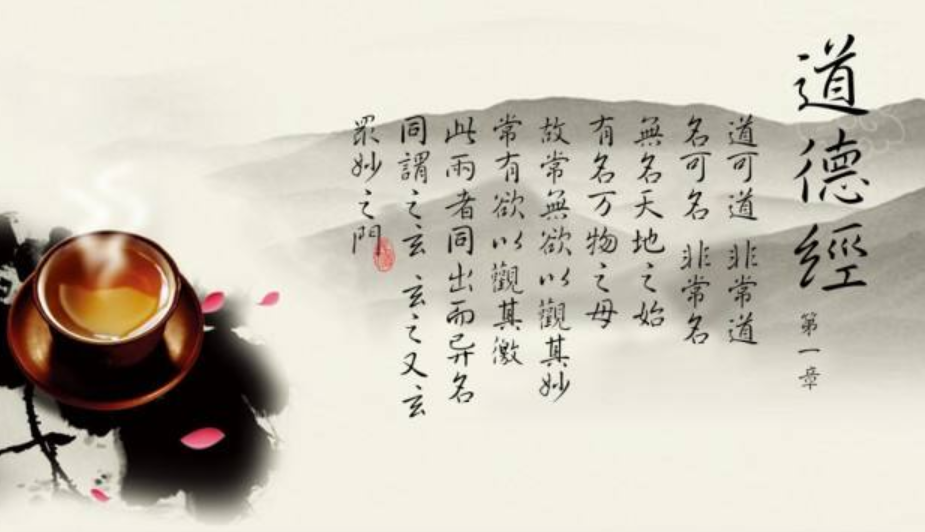
It is not only an important source for Chinese philosophy, politics and religion, but also translated into dozens of foreign languages. It ranks among the world’s most widely read books, second only to the Bible. Its thought of living in harmony with nature and balancing inner and outer life still inspires modern society.
Tao: In Tao Te Ching, Tao is the fundamental law of the universe and nature, the origin of all existence and movement. Formless, boundless and infinite, Tao naturally generates all things. It advocates abiding by nature and governing through non-action. Laozi wrote, “Dao generates One; One generates Two; Two generates Three; Three generates all things.” All creation originates from Tao. One who grasps the laws of Tao can live in alignment with heaven and earth.
De: De stands for conduct and inner character consistent with Tao, unifying spiritual cultivation and outward behavior. One with high De perceives the essence of Tao and practices it in daily life, advocating inner peace, simplicity, and the principle that governing a state begins with ordering one’s family.
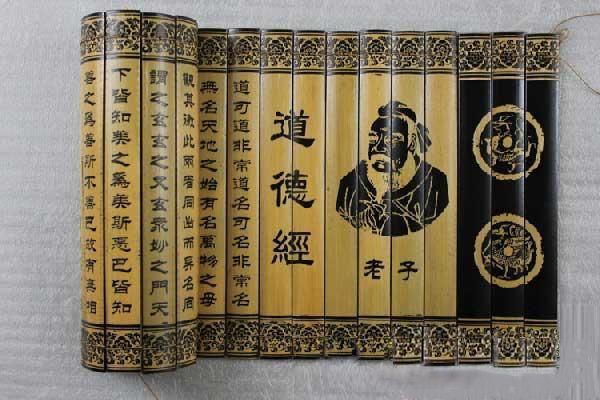
Tao Te Ching offers practical guidance:
- Self-cultivation: Nurture the mind, stay tranquil and desireless, follow nature.
- Governance: Rule by non-action, govern with virtue and curb greed and strife.
- Health preservation: Follow natural rhythms to maintain physical and mental balance.
- Military strategy: Prioritize wisdom and tactics rather than sheer force.